Friedens Community Ministries Website Audit
Group project using the scrum framework
Spring 2021 | Scrum Master
Project Summary
As part of my Agile Project Management class, we were given a project to give us first-hand experience using the scrum framework. For this project, me and a team of other students collaborated remotely to perform an audit of the website of Friedens Community Ministries food pantry. I took on the role of scrum master and worked together with the product owner and 5 developers to deliver a set of recommendations to improve usability, accessibility, and redesign site components as necessary.
Objectives
The administrator of the Friedens Community Ministries (FCM) food pantry website had concerns about potential issues with the site. She had noticed that the website was not getting as much traffic as it could be, since the website did not show up very high on the list of search results for the food pantry. As scrum master, I was responsible for conducting regular ceremonies like standups, sprint planning and retrospective sessions, and ensure that there were as few obstacles as possible between us and our goals. I also helped the product owner maintain our backlog by making sure tickets were written clearly and were broken down into smaller tickets when necessary.
Process
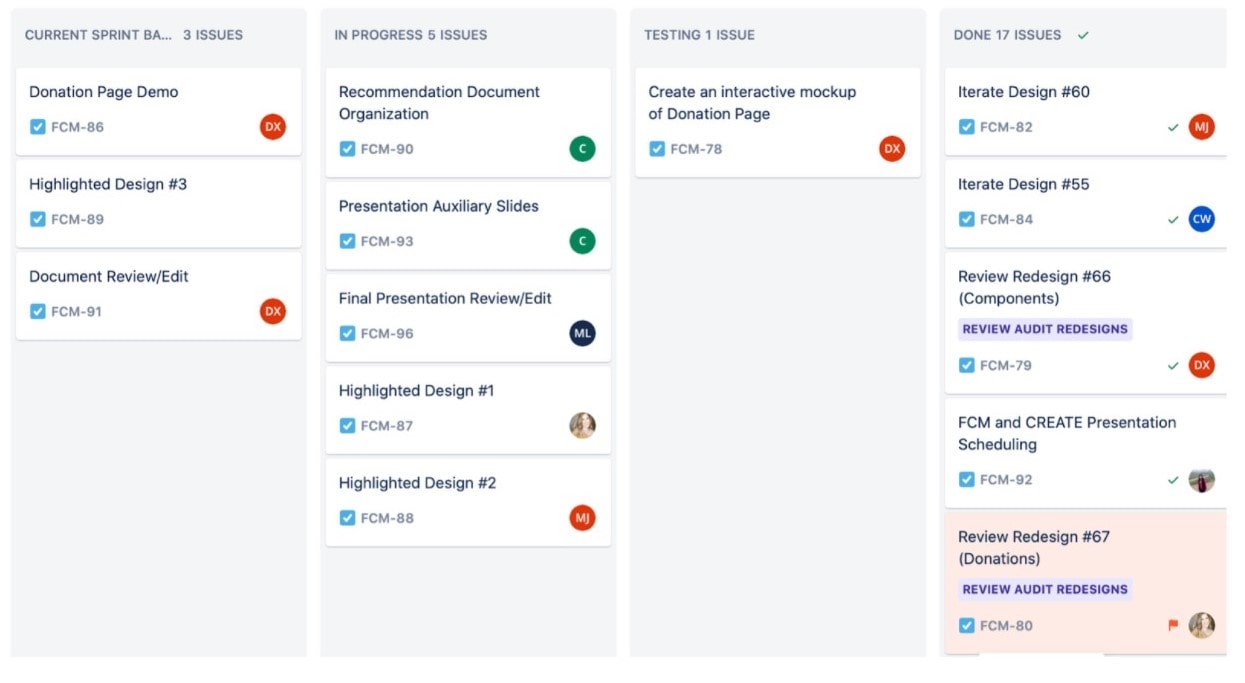
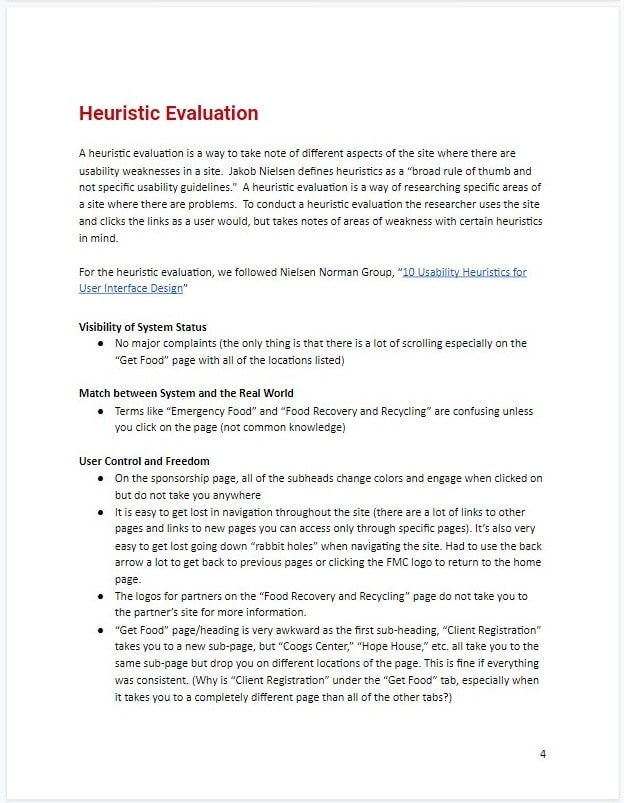
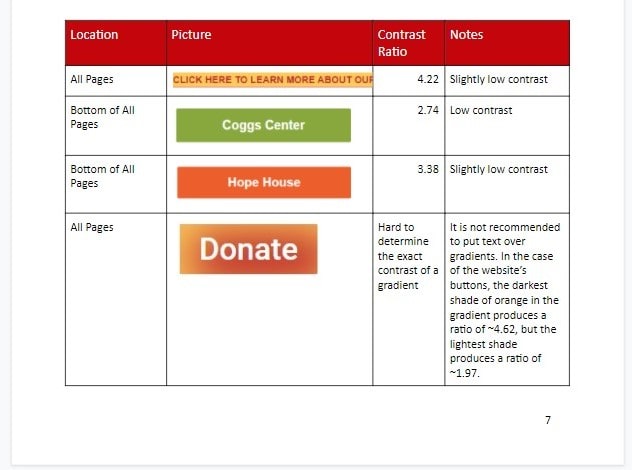
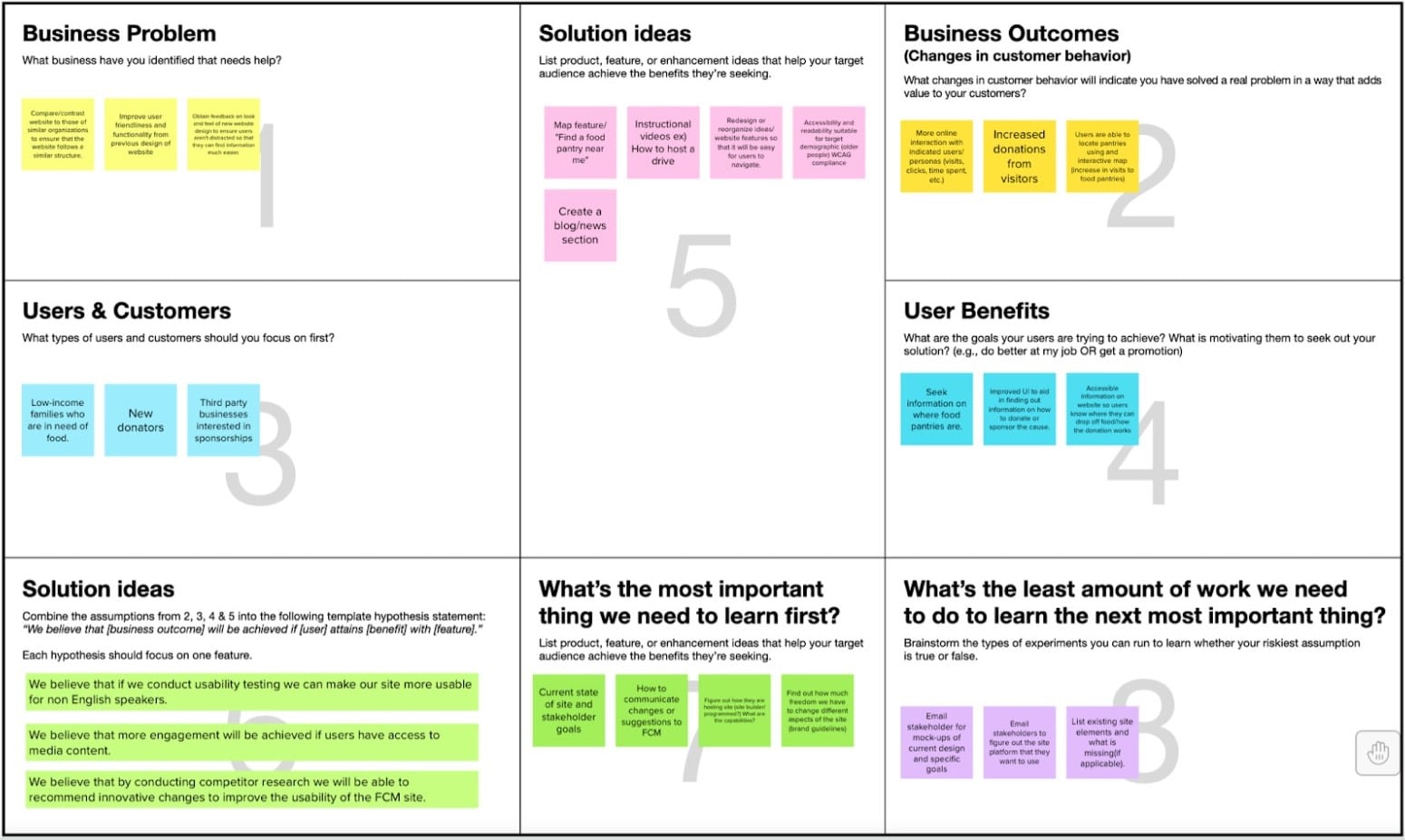
To facilitate our work, we used Jira to track issues and Microsoft Teams for most of our communication. Since our sprints were only a week long, we didn't have too much time between them to figure out problems related to a specific goal. I did my best as Scrum Master to anticipate these problems and begin to address them before the sprint started, but there were inevitably things that cropped up in the middle of sprints that had to be taken care of. Since we weren't able to meet with our client until after the first couple sprints, we had to make judgement calls about how to work towards general goals that would be defined better down the road. To accomplish this, we decided to perform an audit for accessibility and perform a heuristic evaluation, comparing the overall usability of the website to a set of principles defined by the Nielsen Norman Group. After meeting with the client, we were able to use the results of the audits to move forward and tackle more specific problems in the following sprints.
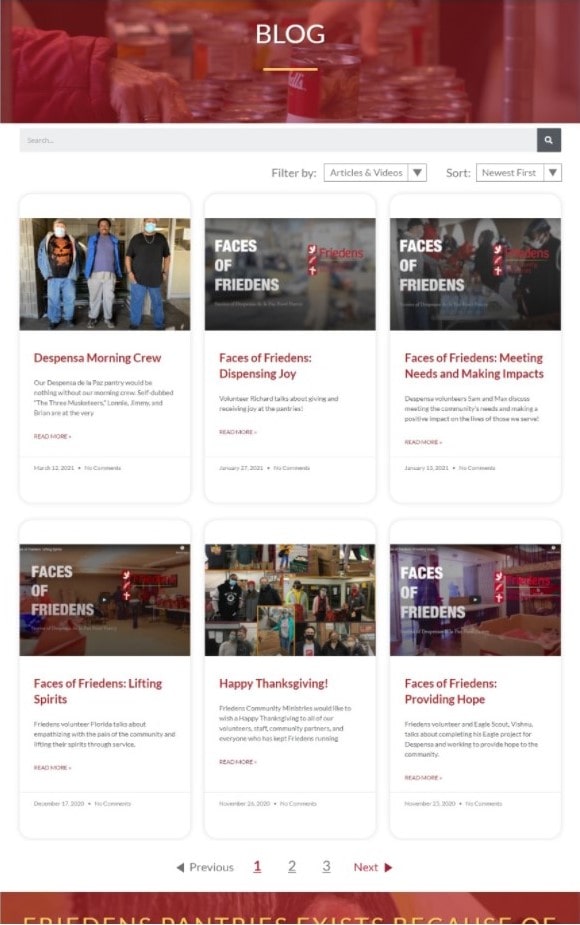
An example of our process is our blog section redesign. We were asked to take a look at it and see what could be improved so that traffic to that part of the site increased. I picked up the task and began working on it. After looking around I figured that most of what was there was fine, but it was very difficult to navigate or do any sort of filtering/sorting, since the only way to see more than the first couple blog posts was to click into them and click on the "Next Blog Post" button at the bottom, which is a big usability issue. In my redesign I included pagination and basic filtering to improve the experience of finding blog posts the user might be interested in. However, when another team member went to review my redesign the next sprint, she was unsure what changes I had made and for what reason since my notes were too vague, and I had to explain what I had done. Following that I tried to encourage more thorough documentation for those types of things so that the same issue wouldn't happen too much.
Challenges
It took our team a little time before we could work to our full potential. In addition to not having much client input until after a couple sprints, we were also a team that was new to scrum and had to get the rhythm down before the framework could benefit us.
One of the largest challenges for us early on was figuring out what to work on. We had a list of things we wanted to do, but we knew that we wouldn't be able to do all of them. To make the most of the work we had already done, we decided to focus our efforts on creating redesigns to improve accessibility and usability, and address issues in site components. This meant that we couldn't improve the website's SEO, and that we wouldn't be able to actually implement our recommendations since there wouldn't be enough time to learn how to use the necessary tools.
After we had gotten more comfortable with the scrum process, we had occasional issues with the direction of solutions and consistency across redesigns, since we were working asynchronously and were still getting better at that style of project communication. I made sure to identify those issues early and thankfully nothing ever developed into more than a small speedbump for us.
Result
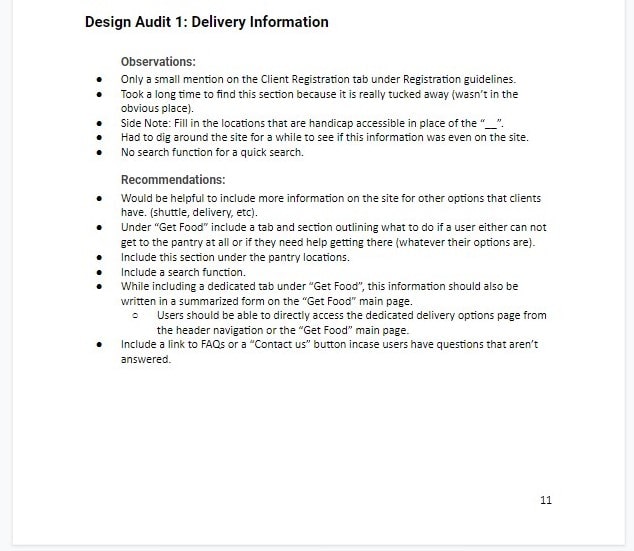
At the end of the term, our team delivered a document that included all of our findings, redesigns, and recommendations in one place with a standardized format. We then had a final meeting with our client to present our work and explain what we had done. Overall, I am very satisfied with what we accomplished. I would have loved to do more to help improve the website, but it also helped me learn how to define goals that allowed us to do what were capable of while allowing enough time to attain a high level of quality. Working in a scrum environment was also new to me, and I definitely think it helped us organize our work better than we would have otherwise. The responsibility of being scrum master was something I was unsure of at first but I ended up growing into the role, and I probably wouldn't turn down a similar role in the future. If I were to do it all again, I would have tried to allocate more effort towards implementing our redesigns and improving site SEO, since it was a part of the client goals that we weren't able to properly address. It also would have been great to have the resources to do testing of our designs to make more informed decisions.
Samples from final document